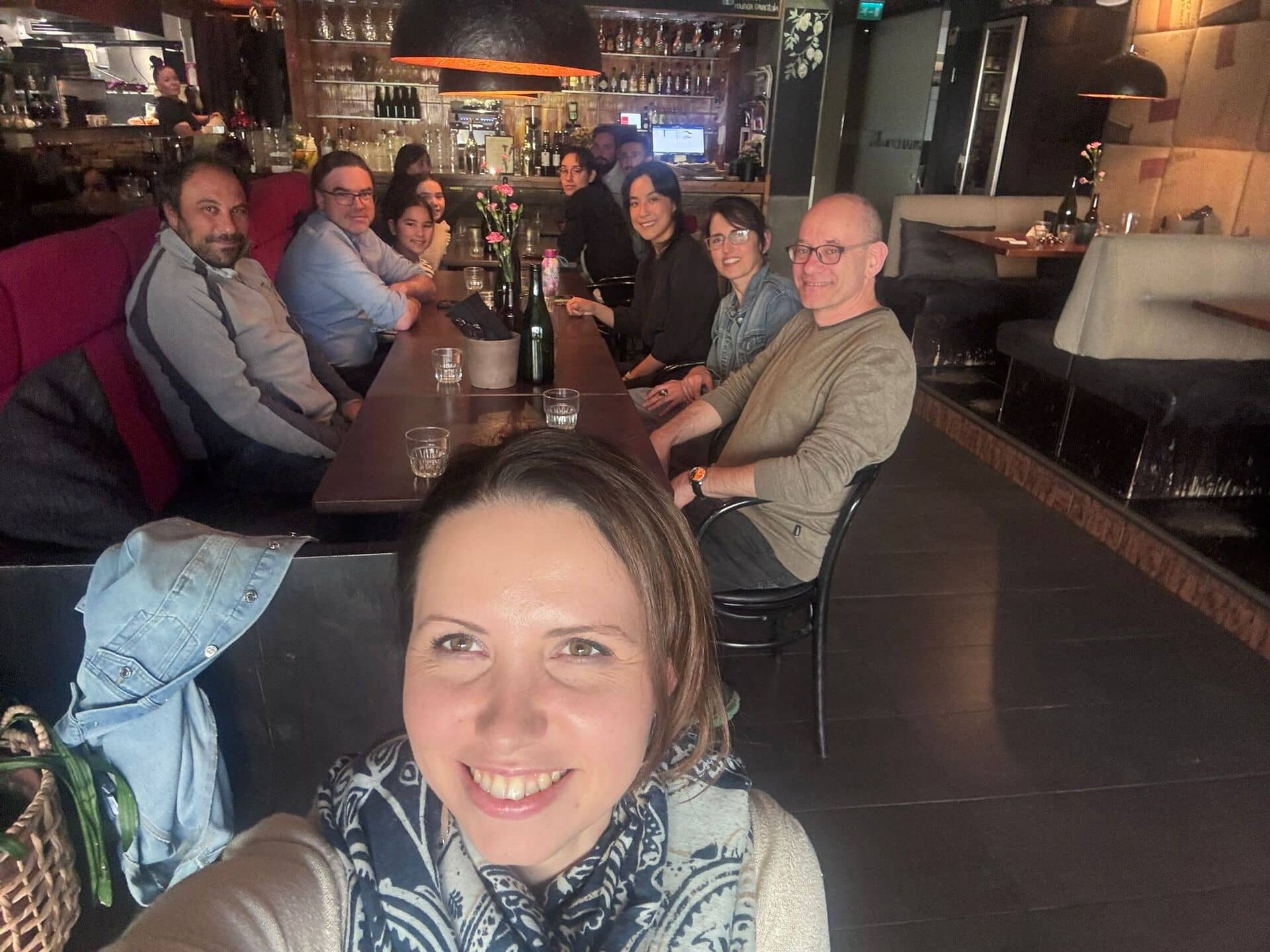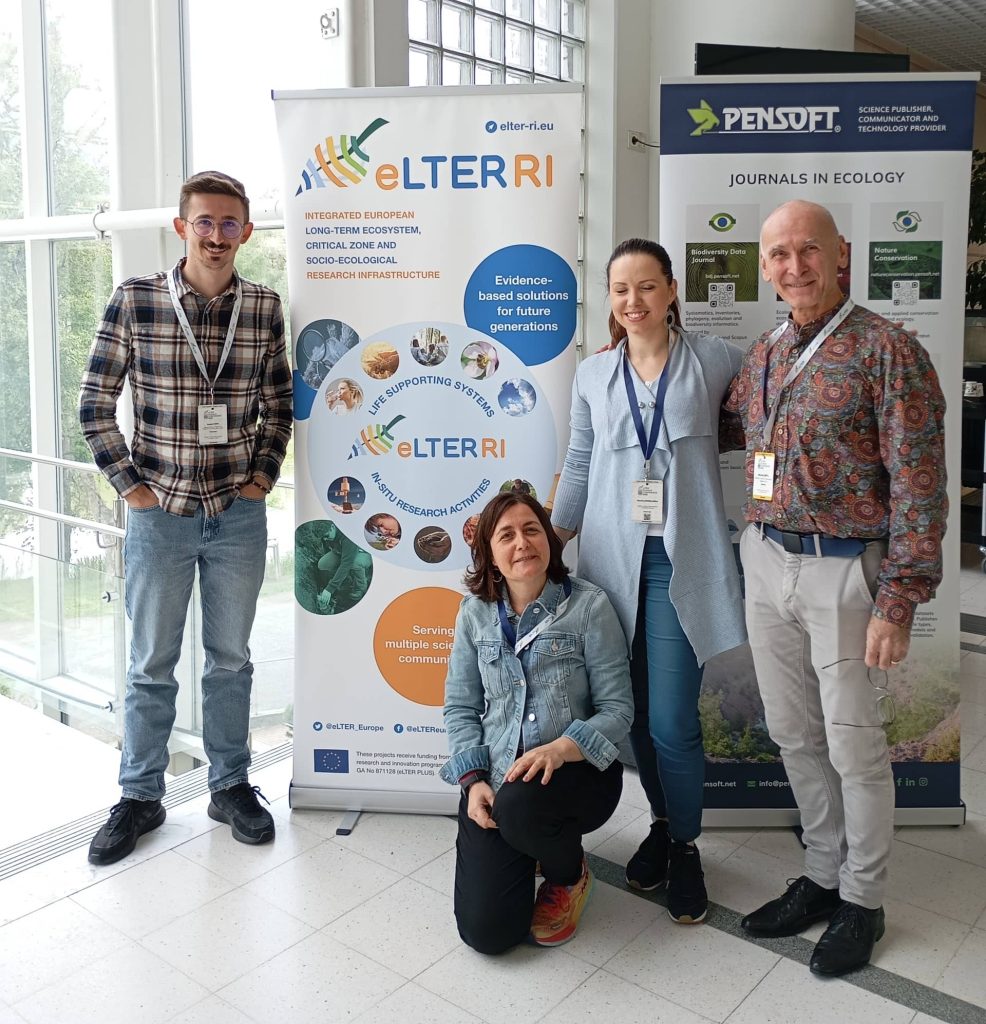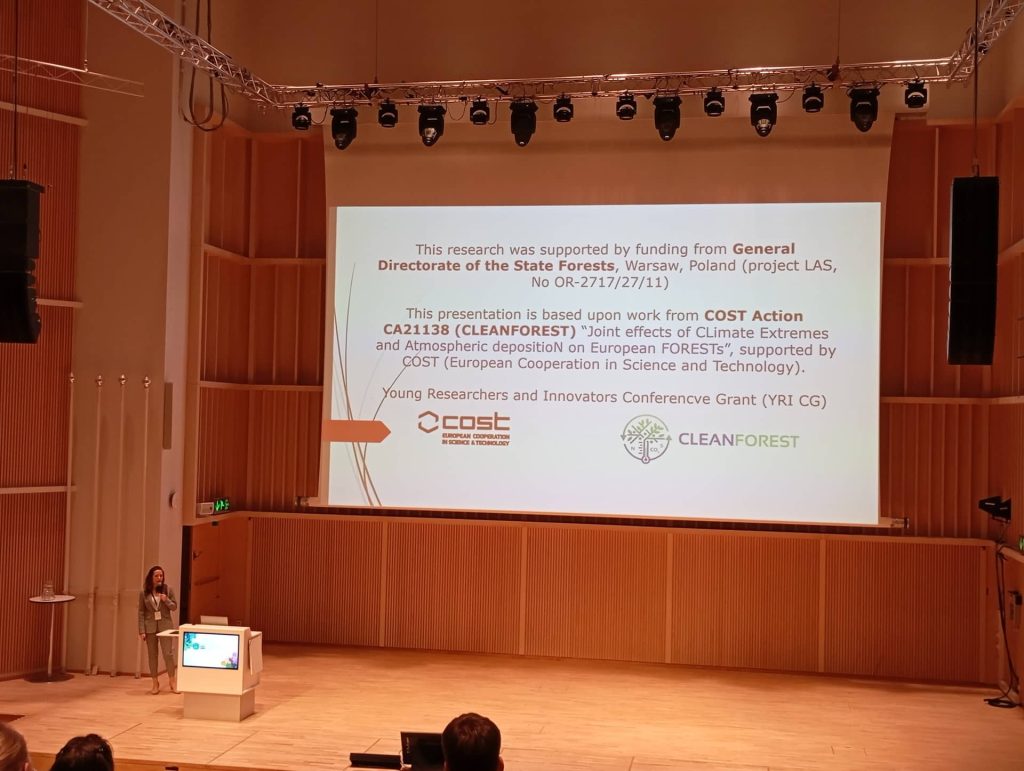
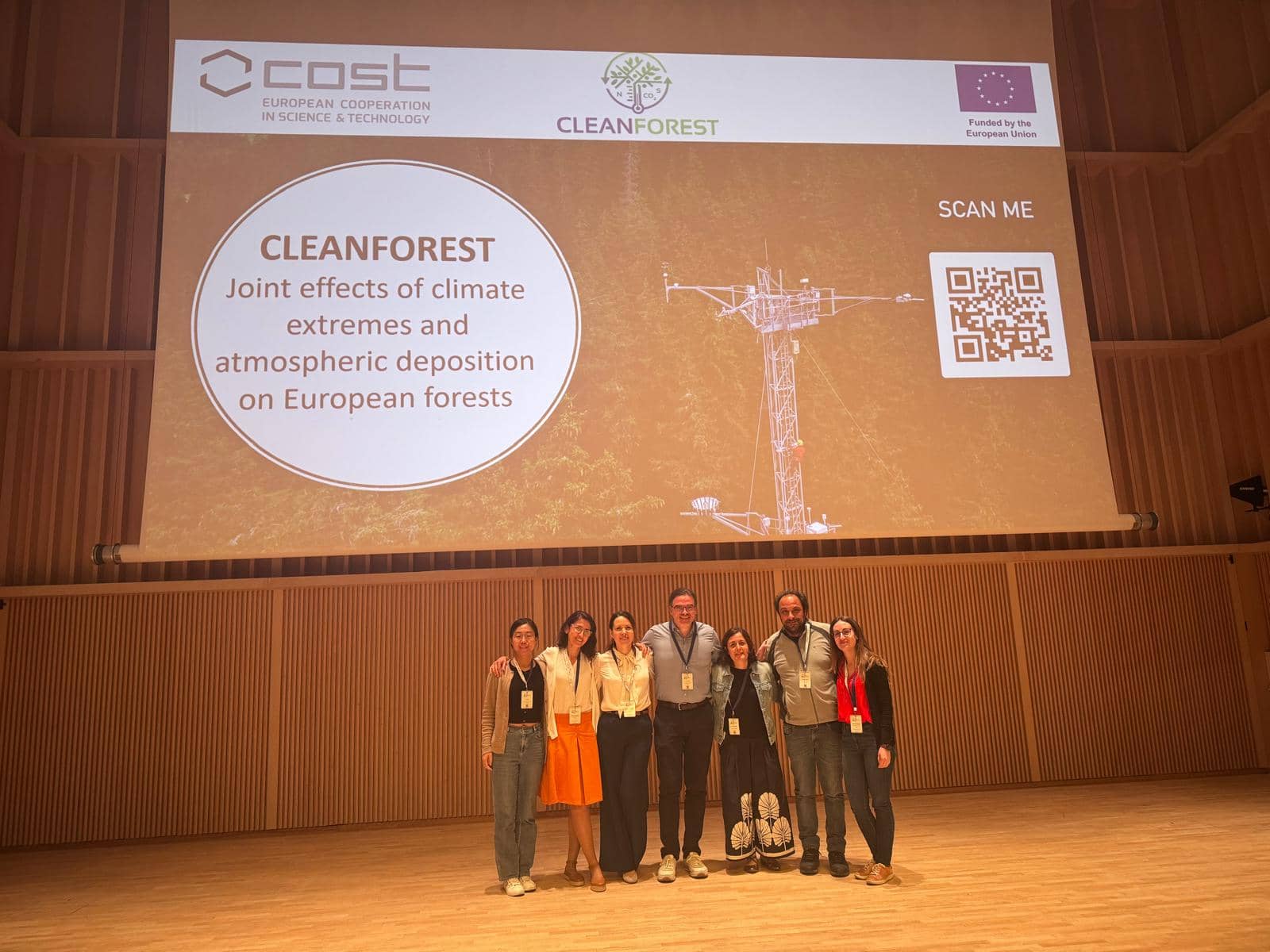
A few members of the CLEANFOREST core group (Rossella Guerrieri, Mariangela Fotelli, Klaudia Ziemblinska and Yann Salmon) co-organized a session on Long-term ecosystem observations and manipulations to understand the effects of global change on forest ecosystems (B8)‘ during the first eLTER scientific conference in Tampere (Finland) on 23-27th June 2025.
The session included 11 talks and 1 invited talk from Ram Oren: Water use and carbon accumulation in a pine forest under elevated atmospheric CO2
BIFoR FACE: Responses of a temperate forest to seven years of elevated CO2.
Anna Gardner
Grazing can alleviate drought stress in trees of natural and planted Mediterranean forests – long-term manipulation experiments at the edge of the desert
José Grünzweig
Tree functioning under different soil water availability and atmospheric water demand
Stefan Hunziker
Critical below-ground drought effects on temperate trees – insights from six years of ecophysiological monitoring and two years of rain exclusion
David Steger
Trends and drivers of long-term forest evapotranspiration in Switzerland
Marius Floriancic
VPDrought – a novel approach to disentangle atmospheric and soil drought in a natural Scots pine forest
Marcus Schaub
Long-term effects of drought and rewetting manipulations on the greenhouse gas balance of a temperate forest soil.
Dylan Goff
Evaluation of environmental research infrastructures services to address impacts on forest health and biodiversity
Omobola Eko
Lehrforst Rosalia – Long-term forest monitoring for improved ecosystem understanding
Eugenio Diaz-Pines
A two-decades mountain forest Carbon sink affected by increased disturbance and drought
Thomas Dirnböck
Nitrogen deposition and cycling in holm oak forests: Seasonal dynamics, canopy interactions and soil losses
Raquel Ruiz Checa
Conference abstracts can be accessed here.
We are also proud that the Action could support two young researchers (Klaudia Ziemblinska and Raquel Ruiz Checa) with Young researcher conference grants to attend the conference and present their results as oral presentations.